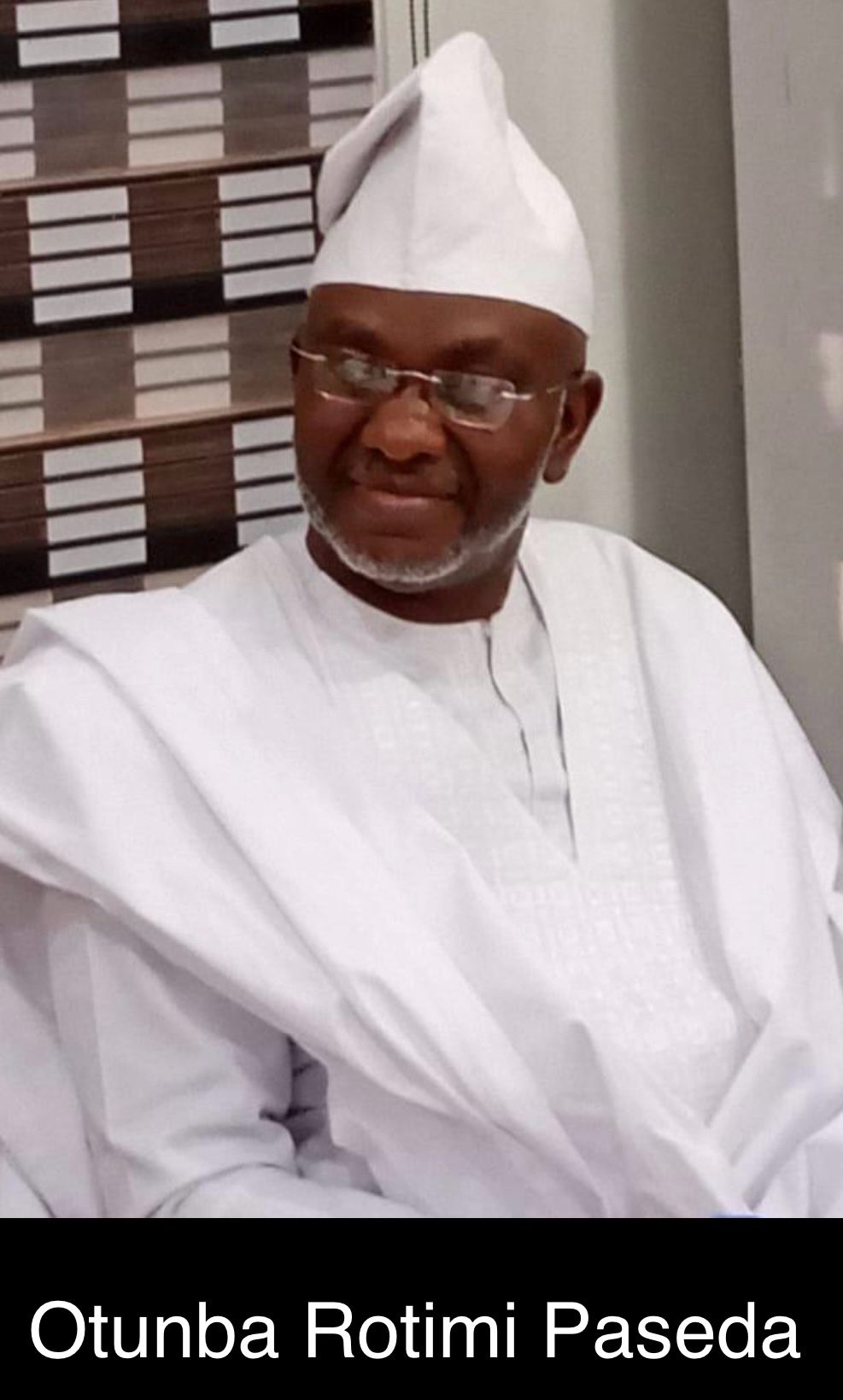
Why Ogun Government Must Stop Interfering in the Awujale Succession Says Otunba Rotimi Paseda
The ongoing controversy over the succession to the vacant throne of the Awujale of Ijebuland is not just another local dispute it is a fundamental clash between Yoruba tradition and political interference, and the state must not be allowed to override established cultural norms.
Since the death of the late Oba Sikiru Kayode Adetona in July 2025, after an unparalleled 65-year reign, the Awujale stool has been vacant, and the rightful process of succession has begun within the Fusengbuwa Ruling House, which is next in rotation to present candidates for consideration by the kingmakers. But instead of allowing tradition to unfold, the Ogun State Government has twice halted the selection process, citing petitions, security concerns, and claims of procedural lapses. The most recent suspension, issued in January 2026, came after petitions including one from Fuji musician Wasiu Ayinde Marshall (KWAM 1) urged the state to halt the process. Make no mistake: this intrusion is a perilous step toward politicising a sacred institution.
In Yoruba tradition, the selection of a king is not a matter for executive fiat. Once it is a ruling house’s turn, eligible princes meet under custom and law to nominate candidates, who are then divinely scrutinised and selected by kingmakers. Any imposition of a candidate by government officials would be a direct violation of that system.
Already, the Fusengbuwa Ruling House has warned that it will reject any attempt by the government to foist a candidate on Ijebuland, insisting the process must be guided strictly by tradition and law.
History shows that colonial and postcolonial state meddling in Yoruba kingship undermines legitimacy and fuels long-term instability. Just as the colonial administrators once interfered with succession systems for political control, today’s interventions threaten to erode the spiritual and cultural foundations of the Awujale institution. When political actors insert themselves into sacred processes, the result is confusion, division, and loss of respect for the throne exactly what many in Ijebuland fear.
The government argues it acts in the interest of “peace, order and good government,” but this cannot be a pretext for overriding clear traditional norms. The Awujale stool is one of the most revered in Yorubaland. Political interference even under the guise of security risks turning it into a pawn of bureaucratic politics, rather than a unifying cultural symbol.
If Yoruba cultural sovereignty means anything, it must mean that the people and their customs determine who wears the crown, not petitions to a governor or executive directives from the state house.
Any attempt to impose candidates or usurp the traditional process will be rejected by Ijebuland and by all lovers of Yoruba heritage.
The Awujale throne deserves respect for tradition, not manipulation by political officeholders. By Otunba Rotimi Paseda