Stakeholders Express Divergent Views On Need For New Laws Regulating NGOs Regulation
By Blessing Tanko/Ebere Agozie

Some legal stakeholders have expressed divergent views on the need for additional legislation to regulate the activities of Civil Society Organisations (CSOs) and Non-Governmental Organisations (NGOs) in Nigeria.
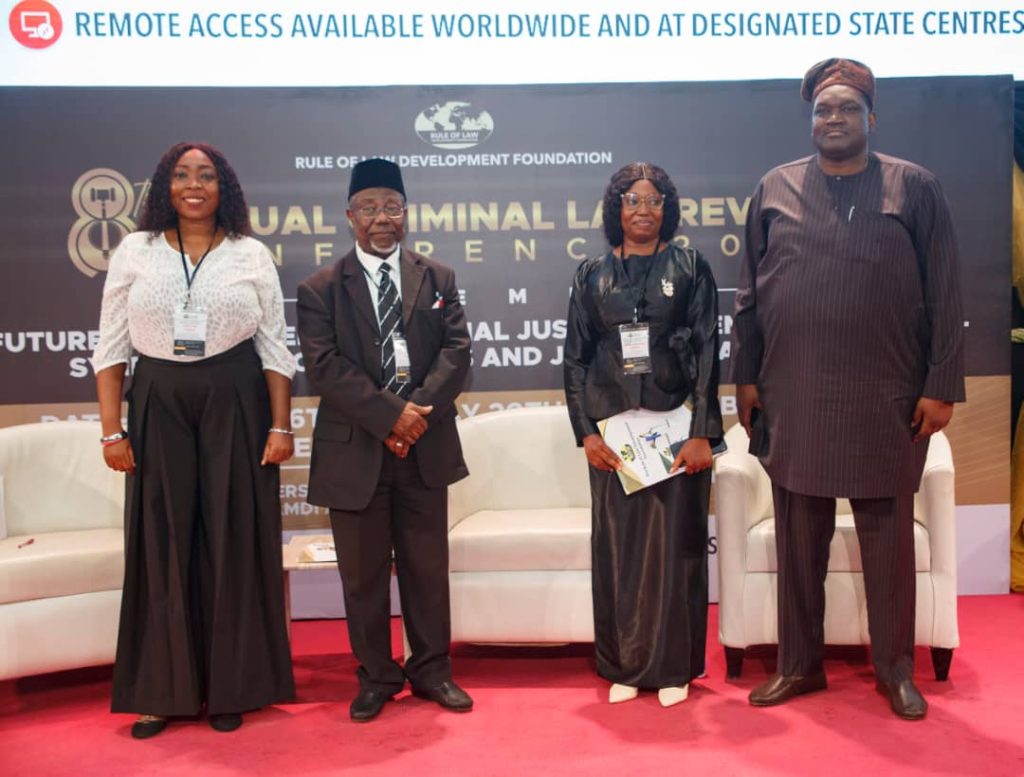
The stakeholders stated their positions at the fifth session of the closing of the 8th Annual Criminal Law Review Conference organised by the Rule of Law Development Foundation (ROLDF) on Friday in Abuja.
While some advocated stronger regulatory frameworks to address financial misconduct, abuse of office and accountability gaps, others warned that excessive government control could undermine constitutional rights and restrict civic space.
The session, chaired by retired Justice Massoud Oredola, examined the theme, “Transparency Vs Control: Does Nigeria Need Legislation, Evaluation/Control of the Activities of Civil Society Organisations and NGOs?”
The News Agency of Nigeria (NAN) reports that the discussion featured Chinyere Moneme, SAN, as lead presenter, alongside Linda Raji and Oluwakemi Omeiza Usman as panellists.
Oredola, in his opening remarks, cited the United Nations Human Rights Committee’s position that government approval was not required to establish or join civil society organisations.
He said freedom of association was a cornerstone of democracy and essential to the enjoyment of other fundamental rights.
According to him, the right to peaceful assembly should not be subjected to governmental authorisation or control, while membership of associations should not be criminalised or sanctioned.
He urged participants to carefully examine the subject, expressing confidence that the discussions would provide perspectives relevant to Nigeria’s peculiar circumstances.
Presenting the lead paper, Chinyere Moneme, SAN, opposed the introduction of additional legislation specifically to control NGOs, insisting that existing laws already provided sufficient regulatory mechanisms.
She argued that the focus should be on transparency rather than control, explaining that trust among NGOs, government and donors was essential to the sector’s operations.
Moneme said government sometimes suspected NGOs of financial misconduct, while donors also questioned how organisations managed funds, resulting in mutual distrust among stakeholders.
She proposed mandatory publication of audited accounts, donor information and expenditure through an accessible online platform to promote transparency and enable relevant agencies to monitor financial transactions.
The senior advocate identified the Constitution, Companies and Allied Matters Act (CAMA), Money Laundering Act, Terrorism Prevention and Prohibition Act 2022, Proceeds of Crime Act and EFCC Act as existing regulatory instruments.
She said concerns about terrorism financing, fraudulent NGOs, national security and foreign influence were already addressed by existing laws, making additional control-oriented legislation unnecessary.
Moneme also cited the Court of Appeal’s decision in Emmanuel Bello v National Assembly and Two Others, which upheld a lower court’s decision on the unconstitutionality of certain CAMA provisions concerning the Corporate Affairs Commission’s powers over incorporated trustees.
Comparing regulatory frameworks in India, the United Kingdom and Kenya, she described India’s system as control-oriented, while highlighting disclosure and accountability mechanisms in the UK and Kenya.
She warned that excessive regulation could weaken civil society activities and called for an independent regulator, judicial oversight, risk-based regulation and a unified online reporting platform.
On the proposed Foreign Aid Bill, sponsored by Sen. Ibrahim Hassan Dankwambo, Moneme said it sought to establish a centralised framework for registering and overseeing foreign aid, grants and donations entering Nigeria.
She said the bill, introduced on May 16, 2026, had passed its first and second readings and was before relevant Senate committees, with a public hearing expected.
However, one of the discussants, Linda Raji, highlighted the contributions of NGOs to national development, particularly in healthcare, education, clean water, skills acquisition, humanitarian assistance and advocacy.
She traced their historical development to post-war humanitarian interventions, explaining that their activities in Nigeria expanded through relief efforts, human rights advocacy and community development.
Raji said NGOs also promoted accountability, policy reforms, community mobilisation and peace-building, particularly in areas where public institutions failed to adequately meet citizens’ needs.
However, she identified donor dependency, duplication of projects, weak institutional structures, financial mismanagement, staff abuse and poor accountability as challenges requiring attention.
Using the foundation’s Project Hope for the Boy Child as an example, she explained that some communities continued to depend on NGOs after projects ended.
She also raised concern about sexual exploitation and abuse of vulnerable beneficiaries by some aid workers, recounting an incident involving a displaced woman whose daughter was allegedly at risk.
Raji said the organisation intervened by providing support, educating the mother on the child’s rights and temporarily relocating the girl to protect her from possible abuse.
She called for stronger financial accountability, independent audits, community feedback mechanisms and effective enforcement of existing laws, while cautioning against political interference.
Raji urged government to take greater responsibility for development, strengthen existing institutions and adopt proportionate, risk-based oversight, while encouraging donors to respect local priorities.
Similarly, Oluwakemi Usman supported stronger regulation of NGOs but cautioned against excessive government control, arguing that the distinction between regulation and control was important.
Usman, a legal officer and volunteer with the International Federation of Women Lawyers (FIDA), said a clear regulatory framework could address fraudulent organisations, diversion of funds and money laundering.
She also advocated statutory minimum standards for safeguarding children and vulnerable populations, particularly in humanitarian and community-based settings.
However, she maintained that Nigeria already had an extensive legal framework, including CAMA 2020, SCUML regulations, tax rules and financial reporting requirements.
Drawing from her interactions with NGOs in Ogun State, Usman said some community-based organisations struggled to meet annual filing requirements because of the financial burden of engaging professional auditors.
She said the situation particularly affected smaller organisations with limited resources, making compliance difficult despite the benefits of legal recognition and public confidence.
The lawyer also expressed concern about the proposed Foreign Aid Bill, warning that its provisions and proposed penalties could place excessive burdens on NGOs and undermine their independence.
She questioned if government, as an interested party, could independently evaluate organisations expected to monitor public institutions and hold them accountable.
Usman advocated a regulatory framework that was transparent, proportionate, politically independent and subject to judicial review.
She also supported self-regulation backed by government, noting that existing civil society accountability initiatives could provide an effective mechanism for promoting compliance.
In her concluding remarks, she said Nigeria needed stronger accountability rather than stronger government control, stressing that NGOs must account for their resources without sacrificing democratic freedoms.
The speakers agreed on the importance of transparency, financial accountability and effective oversight, while emphasising the need to preserve an enabling environment for legitimate civil society activities.
The conference came to a close with remarks from the Coordinator, JB Daudu, who acknowledged the presence and contributions of every participant and tagged this year’s conference as “the best.”
He noted that Kogi State recorded its largest delegation, estimated at between 250 and 300 participants, and acknowledged the state’s Attorney-General.
The convener also appreciated the Nigerian Bar Association, National Industrial Court of Nigeria, Bwari NBA branch and other participating organisations.
He commended individual participants for their contributions, attentiveness and active engagement throughout the conference.