
NMDPRA Cracks Down On Lubricant Blenders
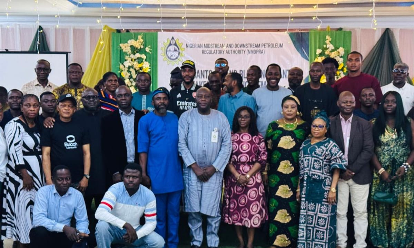
The Nigerian Midstream and Downstream Petroleum Regulatory Authority, NMDPRA, has called on operators in the lubricant oil and blending plant sector to maintain strict regulatory compliance and enforce proper operational documentation across their supply chains.
The call was made during a high-level stakeholders’ engagement held on Thursday, in Abeokuta, Ogun State.
The engagement is themed “Advancing the Growth and Sustainability of Lube Oil and Blending Plant Operations in Ogun State Through Effective Regulatory Frameworks,” and was organised by key downstream operators, blenders, and regulatory authorities to address pressing industry challenges.
In his welcome address, the Ogun State Coordinator of NMDPRA, Dr Atilola Akinyemi, emphasised the critical role of lubricant blenders in driving Nigeria’s economy, noting that every auto and industrial engine relies directly on their products to function.
The regulator noted that every stakeholder in the sector carries a huge socio-economic responsibility, supporting at least five families, which leaves no room for unsafe or non-compliant operations.
He expressed strong concern over the proliferation of substandard engine oils, which compromise equipment safety, crash market prices, and undermine legitimate local manufacturers.
Akinyemi clarified that the authority’s objective is not to stifle investments, but to ensure that one business’s operations do not negatively impact others.
“We are not just a regulator; we are business enablers. We enable your business and ensure that it grows,” he stated.
He urged operators to maintain open communication and work collaboratively with the authority’s state office.
Presenting a technical paper on product standards and quality assurance, Adebowale Oluwafemi, Head of Distribution and Regulatory Infrastructure at the NMDPRA Abeokuta Field Office, stressed that certification must be maintained continuously rather than used as a mere marketing label.
Oluwafemi highlighted common causes of product failure in local blending, including poor base-oil selection, incorrect additive dosages, contamination from water, dirt, tanks, pipelines or previous batches, and inadequate batch documentation, warning that brand owners remain fully accountable for oversight across
Citing enforcement case studies across the region, including SON’s 2022 sealing of a contract-blending facility in Shimawa, Ogun State, where 14 substandard lubricant brands were uncovered, the authority reminded brand owners that they remain fully accountable for supply-chain oversight.
He cautioned operators that failure to provide accurate documentation or meet reconciliation requirements will result in severe regulatory consequences, including the denial or non-renewal of operating licenses.
In her remarks, Mrs Stella Iyoha from Chykkason Ltd commended the engagement for exposing her to vital insights she previously lacked, noting that the session inspired her to develop her own plans.
She also called for similar forums to be held as frequently, expressing optimism that third-party lenders are already working with experienced operators and are committed to compliance.