CG Audi Abubakar’s Steadfast Leadership And The Transformation Of The NSCDC

Oladapo Sofowora
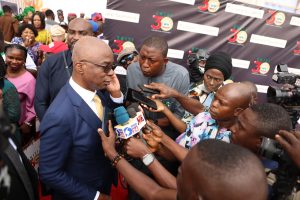
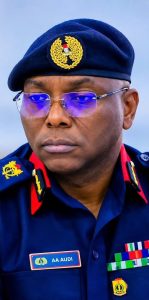
In the intricate landscape of Nigeria’s internal security architecture, the Nigeria Security and Civil Defence Corps (NSCDC) has undergone a profound redefinition of its institutional identity in recent years but that transformation was put to its most severe test in September 2026, when the deaths of thirty-seven suspected illegal miners in custody in Minna thrust both the Corps and its helmsman, Commandant-General Ahmed Abubakar Audi, into the glare of national scrutiny. Yet in the midst of grief and legitimate demands for accountability, Audi’s response decisive, transparent and principled nature illustrates precisely why he merits commendation rather than condemnation for the pivotal role he has played in the quest for justice.
Between 15 and 16 September 2026, operatives of the NSCDC Niger State Command conducted operations against illegal mining activities in the M.I. Wushishi and Lukoto areas of Minna, resulting in the arrest of dozens of suspects. In the early hours of 17 September, thirty-seven of those detained were discovered dead in custody.
The Niger State Command initially attributed the deaths to a suspected disease outbreak, but the Corps’ national headquarters moved swiftly to clarify that the actual cause of death had not been established and would be determined only through medical and laboratory confirmation. That measured posture resisting the temptation to offer convenient explanations prevented premature conclusions that could have compounded an already grave situation. The anguish of bereaved families was palpable and wholly understandable and how Audi responded to them that his leadership revealed its character.
Confronted with this crisis, the Commandant-General did not retreat into evasion or defensiveness. He acted with a clarity that has too often been absent in Nigeria’s security establishment. First, he constituted a high-level investigative panel. Audi directed the establishment of a team led by the Deputy Commandant-General in charge of Intelligence and Investigation, with a mandate encompassing every material question; the circumstances of the arrests, the duration and conditions of detentionband the medical care or absence thereof afforded to those held. That a security institution would subject itself to such searching internal scrutiny is, in the Nigerian context, far from commonplace.
Second, he suspended the officers implicated. The Niger State Commandant, Suberu Siyaka Aniviye, was suspended with immediate effect pending the outcome of investigations. The Federal Ministry of Interior endorsed the measure, describing the incident as regrettable and pledging a comprehensive inquiry which is set to unravel the true picture of the situation. This refusal to shield one’s own, the instinct that so often corrodes public trust was a conspicuous departure from institutional habit.
Third, he embraced inter-agency cooperation. The Corps worked in concert with health authorities and sister security agencies to ensure that appropriate medical and public health measures were instituted and that the welfare of those still in custody was treated as paramount. The bodies of the deceased were transferred to the Minna General Hospital for medical examination to ascertain the true cause of death. In his public statement, Audi mourned with the families of the deceased and pledged that “the incident will be thoroughly investigated and dealt with appropriately, in accordance with established facts.” This is the language of a leader anchored in evidence rather than expediency and in the annals of Nigerian security governance, such restraint deserves to be acknowledged.
To appreciate the logic of Audi’s response in Minna, one must consider the broader trajectory of his stewardship of the NSCDC. Upon assuming office in 2021, he inherited a Corps that was underfunded, poorly equipped and demoralised due to some internal issues that need rejigging. In the public imagination, the NSCDC was little more than a peripheral agency only visible during electionering period, directing traffic at fuel stations, but seldom regarded as a serious instrument of internal security. Audi as a trained scholar with a repertoire of knowledge in security, venvisaged something altogether more consequential and his reform agenda has been both systematic and deliberate hinged on Professionalism. He established specialised operational units among them the Mining Enforcement Corps, the Special Intelligence Squad, the Female Special Squad and the Strike Force. The creation of the mining enforcement unit was itself a response to the plunder of Nigeria’s mineral wealth and the strategic logic that animated the Minna operation flows directly from that mandate. That the operation ended in tragedy is a matter of profound regret; that illegal mining warranted decisive enforcement is indeed not in doubt. His infusion of Technological advancement gadgets in the corps operation laid a solid foundation for a more coordinated security efforts. Audi with the help of the federal government, equipped state commands with tactical aerial surveillance drones, night-vision devices, GPS trackers and body-worn cameras, translating the rhetoric of intelligence-led operations into operational reality. This shift from brute force to informed precision reflects a sophisticated understanding of modern security best practice.
Under his leadership, protection of economic assets became a paramount mandate. The Corps dismantled more than four hundred illegal refining sites, arrested 4,677 suspected economic saboteurs, and secured 638 convictions. Revenue generated from the solid minerals sector surged from ₦6 billion annually to ₦38 billion with ₦30 billion recorded in 2025 alone. Audi actively cultivated collaboration with the Nigeria Police Force; the Inspector-General’s historic visit to the NSCDC headquarters in April 2026 marked a substantive improvement in relations between the two agencies. This posture of coordination rather than rivalry is genuinely novel in Nigeria’s security architecture.
It is for these reasons that President Buhari first appointed him in 2021 and that President Tinubu renewed his tenure for a further five years in February 2026, commending him for repositioning the NSCDC as a frontline institution carrying greater responsibility within the national internal security framework.
The tragedy in Minna is real and the loss of thirty-seven souls is irreparable. The anger of the bereaved is entirely legitimate, but to lay that tragedy at Audi’s feet alone would be both unjust and unhelpful in preventing its recurrence. The qualities Audi displayed in its aftermath are precisely those scarce in Nigerian security governance; transparency rather than obfuscation; decisiveness rather than procrastination; systemic reform rather than improvisation. He did not defend his subordinates’ failures; he ordered an investigation, suspended the officers concerned, and paraded them before the press and further committed to publishing the findings. Such leadership, eschewing the protective reflexes that so often prevail deserves to be recorded and affirmed.
More fundamentally, the NSCDC under Audi is undergoing a quiet revolution. From the establishment of the mining enforcement corps to the diffusion of modern equipment, from the safeguarding of economic assets to the cultivation of inter-agency partnership, the Corps is moving from the margins to the centre, from passivity to purpose. The Minna incident is a grave setback in that journey, but it must not be permitted to obscure the systematic smooth journey itself.
Justice requires not only the punishment of the guilty but also the recognition of those who, under difficult circumstances, persist in doing what is right. In the shadow of thirty-seven deaths, Audi Abubakar chose confrontation over evasion, accountability over protection and reform over inertia. To such a leader, in such a moment, we owe not reproach, but a measure of kudos for standing upright.