Nyameh Questions N22.8bn Taraba Airport Project
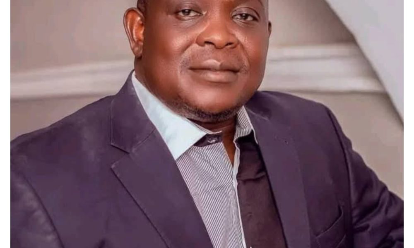
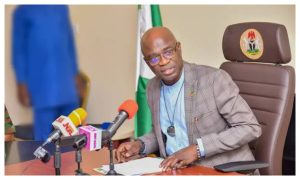
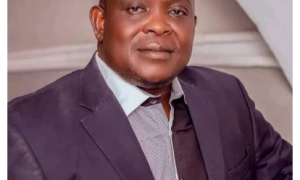
Professor Jerome Nyameh, the Accord Party governorship candidate in Taraba state, on Monday questioned the state government’s decision to approve N22.8 billion for the rehabilitation of Jalingo Airport, arguing that the funds could have addressed more pressing developmental needs across the state.
Nyameh expressed concern over the scale of the proposed investment, noting that the airport serves a relatively small segment of Taraba’s population compared with other essential infrastructure and public services that directly affect millions of residents.
In a statement reacting to a video in which the commissioner for transportation disclosed the approval of the N22.8 billion allocation, Nyameh stressed that prioritisation should remain a fundamental principle of governance, particularly when public resources are limited.
“The amount could potentially have been channelled into projects with wider social and economic benefits within six months,” Nyameh argued.
“Such investments could include extending electricity to underserved communities in Kurmi, Gashaka, Sardauna, Bali, Karim Lamido and parts of Gassol,” he added.
He also suggested that the funds could be used to provide MRI and CT scan machines at Specialist Hospital, Jalingo; General Hospital, Takum; and First Referral Hospital, Mutum-Biyu, Gassol, to improve access to advanced medical diagnostic services.
Nyameh further identified sustainable water supply projects across the state as another critical area that could benefit from the proposed expenditure, noting that many households continue to face difficulties accessing clean and reliable water.
While acknowledging that airport development is important, the Accord governorship candidate said the central issue was whether the timing, cost and scale of the rehabilitation reflected the most urgent needs of the people.
“Development is not just about the projects a government can execute; it is also about the needs it chooses to address first,” he argued.
Nyameh maintained that citizens have the constitutional right and civic responsibility to demand explanations regarding the approval, allocation and utilisation of public funds.
He emphasised that questioning government expenditure should not be interpreted as political opposition but as a legitimate demand for transparency, accountability and value for money.
He noted that public resources belong to the people and that every expenditure must reflect their collective interests and developmental priorities.