Osifo Urges Leaders to Embrace Humility, Cites Fayose, Tinubu, Oshiomhol
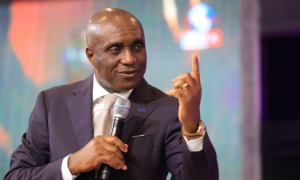
Lawyer and political analyst, Osifo Osa Washington, has urged Nigerian leaders to embrace humility, inclusiveness and people-oriented governance, saying their legacies will ultimately be determined by how they treat citizens while in office and how they relate with them after leaving power.
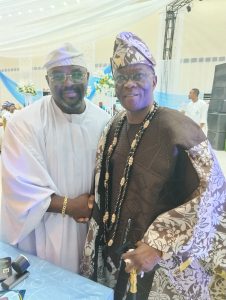
Osifo made the call in a political commentary titled “Power Is a Bus-Stop: When You Alight, Will You Leave a Fragrance or a Stench?” following his encounter with former Ekiti State Governor, Ayodele Fayose.

He described Fayose as a humble and accessible politician who continued to interact freely with people from different walks of life without the elaborate protocol associated with public office.
According to Osifo, the encounter reinforced his belief that political authority is temporary, while character and relationships remain essential to a leader’s legacy.
“Power does not change a man; it only unveils him. The humble becomes humbler, while the arrogant becomes crueler. When power departs, what remains is not the office you occupied, but the character you displayed,” he said.
Osifo, who is also a public administrator and policy analyst, classified political leaders into two categories: bridge builders and wall builders.
He described bridge builders as leaders who use their positions to promote unity, accessibility, empathy and development, while wall builders, according to him, create barriers through arrogance, exclusion and strained relationships with the people they govern.
He maintained that leaders who fail to recognise the temporary nature of political power risk becoming disconnected from the same communities whose support helped them attain office.
Using Edo State as an example, Osifo contrasted the political experiences of former governors Adams Oshiomhole and Godwin Obaseki, arguing that public perception and relationships with citizens play significant roles in determining a leader’s relevance after office.
He described Oshiomhole as a politician who had maintained considerable grassroots visibility and political relevance beyond his tenure as governor, attributing this partly to his identity as a former labour leader and his connection with ordinary citizens.
In contrast, Osifo said Obaseki’s administration was allegedly characterised by aloofness and strained relationships with sections of the political class, traditional institutions and other stakeholders.
He recalled the reported admonition of the Oba of Benin, Oba Ewuare II, to Obaseki on the importance of humility and maintaining cordial relationships with the people.
Osifo said the episode illustrated the need for public officeholders to recognise that their authority would eventually end, while the consequences of their conduct could continue to shape public perception.
Extending his analysis beyond Edo State, the political analyst cited the late former Lagos State Governor, Alhaji Lateef Jakande, and former President Goodluck Jonathan as Nigerian leaders whose conduct and experiences in public office offered lessons in leadership and political transition.
He also referenced former South African President Nelson Mandela, former Singaporean Prime Minister Lee Kuan Yew and former British Prime Minister Winston Churchill as examples of leaders whose historical legacies have endured beyond their time in office.
In contrast, he cited former Zairean leader Mobutu Sese Seko, Zimbabwe’s Robert Mugabe, Romania’s Nicolae Ceaușescu and former Philippine President Ferdinand Marcos in discussing how authoritarian rule, political repression and controversies can influence the legacies of political leaders.
According to Osifo, the examples demonstrate that occupying the highest political office does not automatically guarantee lasting public acceptance.
“The true test of power is not how many people you command when you are in office, but how many people welcome you when you are out of office,” he said.
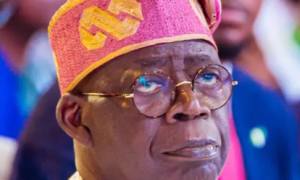
Osifo also examined President Bola Ahmed Tinubu’s political journey, particularly his tenure as Lagos State governor between 1999 and 2007, arguing that coalition-building, political networking and the cultivation of relationships helped sustain his influence after leaving office.
He said Tinubu’s political trajectory demonstrated the importance of building alliances across different interests and developing political structures that could remain relevant beyond a single administration.
Turning to Edo State’s current administration, Osifo commended Governor Monday Okpebholo for what he described as efforts towards inclusive governance.
He cited the appointment of Martin Oli, an indigene of Enugu State, as a commissioner in the Edo State cabinet, describing it as an example of extending political opportunities beyond ethnic boundaries.
He also highlighted the appointment of Melody Omosah, a visually impaired civil servant, as a permanent secretary, saying the development underscored the importance of recognising competence and capacity irrespective of physical disability.
Osifo urged the governor to sustain what he described as an inclusive approach to governance, adding that appointments based on merit and broader representation could help strengthen public confidence in government.
He, however, stressed that the ultimate assessment of any administration would depend on its performance, treatment of citizens and ability to deliver tangible benefits to the people.
In his concluding remarks, Osifo urged presidents, governors, ministers, commissioners and other public officeholders to use their positions to empower citizens and build lasting relationships rather than create barriers between government and the governed.
“You will leave office one day, but office will not leave you. It will follow you as either a fragrance or a stench,” he said.
He added: “The greatest legacy is not the buildings you erect, but the bridges you build in the hearts of men. History does not remember how long you ruled; it remembers how well you related.”