Was George Weah’s NBA-AGC Invitation Justified?
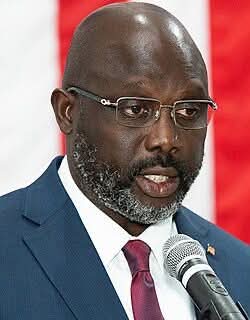
2019 U.S. Independence Day Celebration at the U.S. Embassy in Monrovia, Liberia
By George Bamidele Ogunjimi, Esq
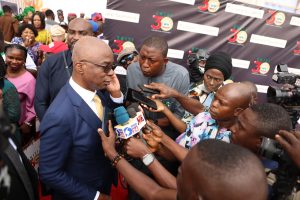
The decision of the Nigerian Bar Association (NBA) to invite former Liberian President, George Manneh Weah, as a keynote speaker at its 2026 Annual General Conference has sparked debate over whether his record in office aligns with the principles he addressed at the gathering.

Weah, who spoke on democracy, the rule of law, judicial independence and the dangers of elected leaders becoming authoritarian, drew attention to the responsibility of institutions and lawyers to protect constitutional governance.
His invitation, however, has raised questions about the consistency between his message and aspects of his administration’s record between 2018 and 2024.
There are strong arguments in favour of the NBA’s decision. As a former democratically elected African president, Weah spoke from direct experience of the pressures and challenges of executive power. His experience offered an opportunity to examine the realities of democratic governance from the perspective of someone who had occupied the highest political office in his country.
A particularly significant aspect of Weah’s legacy was his response to the 2023 Liberian presidential election, which he lost to Joseph Boakai. Weah conceded defeat and peacefully handed over power, an action widely viewed as an important demonstration of democratic maturity in West Africa.
His experience could therefore provide useful lessons for lawyers, policymakers and students of democracy, particularly on the importance of accepting electoral outcomes and facilitating peaceful transfers of power.
However, critics argue that the subject of Weah’s address made his invitation more controversial.
During his presidency, his administration faced criticisms over corruption, institutional weaknesses, transparency and concerns about judicial independence. International observers and human-rights organisations also raised questions about the effectiveness and independence of Liberia’s institutions.
These concerns have become particularly relevant because Weah was addressing members of the legal profession on principles that include judicial independence and respect for constitutional restraints.
Questions surrounding corruption and accountability have also followed his administration. Several senior Liberian officials faced sanctions by the United States over corruption-related allegations during Weah’s presidency, while concerns were raised about transparency and accountability in government.
Human-rights lawyer and Senior Advocate of Nigeria, Femi Falana, also criticised the NBA’s decision to invite Weah, citing concerns over the former Liberian administration’s record and alleged failure to comply with some decisions of the ECOWAS Court.
While allegations against a former government should not automatically invalidate every lesson its leader may offer, they raise a legitimate question about whether Weah should have been presented without sufficient context as an authority on the rule of law and good governance.
At the same time, it would be unfair to judge Weah’s entire political legacy solely by the criticisms against his administration. Liberia remained a constitutional democracy throughout his tenure, and his peaceful acceptance of electoral defeat remains a significant democratic achievement.
The more important question, therefore, is not whether Weah has demonstrated democratic values. He has. Rather, it is whether his overall record made him the appropriate keynote authority on judicial independence, constitutionalism and democratic governance before Nigeria’s legal profession.
The NBA could arguably have turned the controversy into an opportunity for deeper intellectual engagement by openly examining both sides of Weah’s record. Rather than presenting him simply as a voice on democracy and the rule of law, the conference could have explored the successes, shortcomings and institutional challenges of his presidency.
Such an approach would have allowed lawyers and other participants to examine the complexities of democratic leadership and learn from both the achievements and failures of a former African head of state.
Ultimately, the invitation was defensible, but the manner in which it was framed remains open to criticism.
Weah’s experience as a former president and his peaceful transfer of power give him valuable lessons to share. However, criticisms concerning corruption, institutional accountability and judicial independence make it difficult to portray his administration without qualification as a model of good governance.
For the NBA, the distinction should be clear: inviting George Weah as a former African president with lessons from his experience can be justified; presenting him uncritically as an authority on democratic governance is far more difficult to sustain.
For an organisation whose professional mandate is deeply connected to the rule of law, constitutionalism and judicial independence, public confidence should remain the ultimate consideration.
The NBA’s decision could have carried greater credibility had it confronted, rather than overlooked, the contradictions between Weah’s message at the 2026 conference and the criticisms that characterised aspects of his presidency.