Unverified Claims Threaten Public Trust, NADG Warns In Defence Of Matawalle
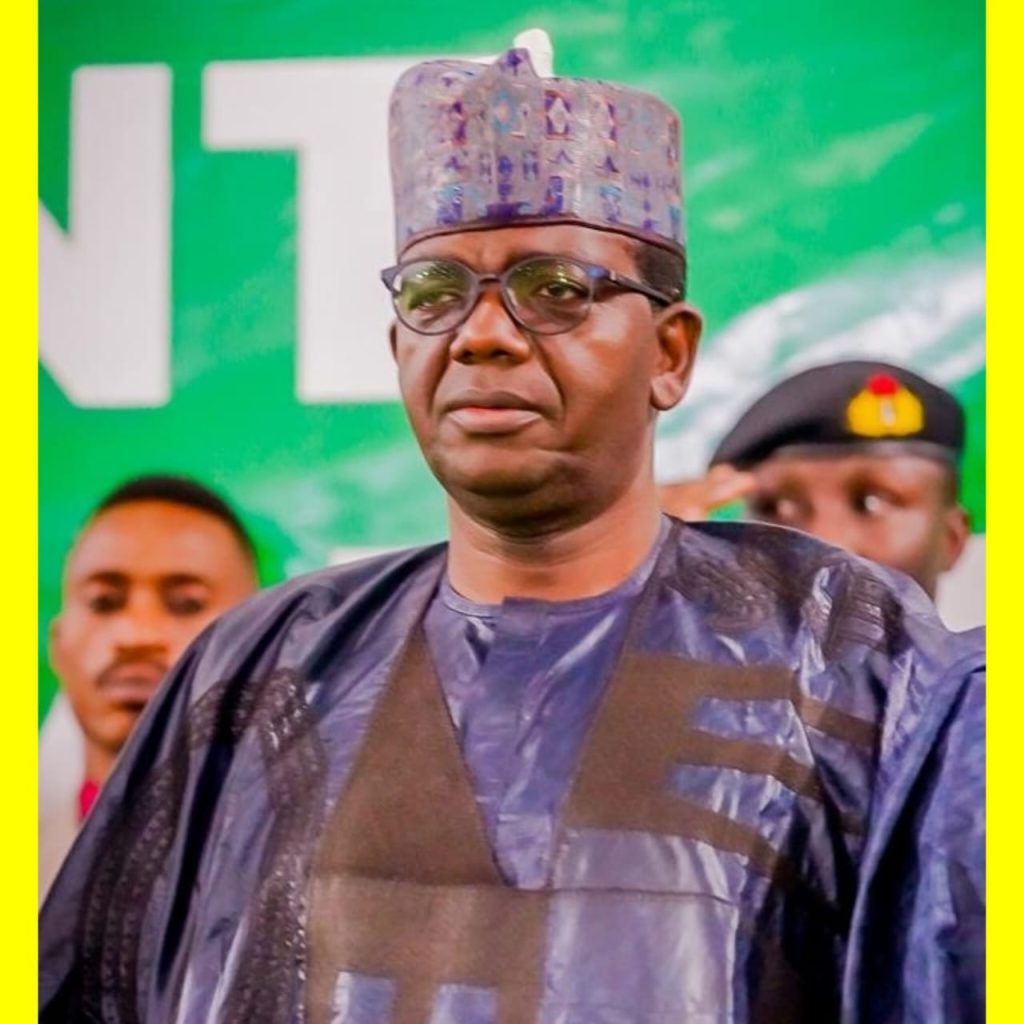
The National Alliance for Democratic Governance (NADG) has forcefully dismissed allegations linking the Honourable Minister of State for Defence, Dr. Bello Mohammed Matawalle, to terrorism and bribery, insisting that no credible evidence has been presented to support the claims and warning against what it described as a troubling rise in unverified narratives in national discourse.
In a comprehensive press statement signed by its Deputy National Publicity Secretary, Arc. Bello Muhammed, the coalition said it undertook a careful review of the allegations circulated by Kimberly Daniels regarding Nigeria’s security situation and the person of the minister, concluding that the claims fall short of the evidentiary standards required in a democratic society.
The group stated that it was compelled to intervene “firmly, objectively, and without prejudice,” noting that its action was driven by a commitment to “defend due process and guard against the dangerous normalisation of unverified claims in matters of national importance.”
NADG acknowledged the severity of Nigeria’s current security challenges, particularly in parts of the North-Central and North-West regions, where communities have experienced violent attacks and instability. However, it strongly rejected attempts to attribute these complex challenges to a single public official.
“There is no denying that Nigeria is confronted with serious and evolving security challenges across multiple regions,” the statement read, adding that these incidents “deserve urgent, sustained, and coordinated responses from government.” Yet, it warned that “it is both analytically flawed and institutionally irresponsible to personalise these systemic challenges by attempting to pin them on a single public official.”
According to the coalition, Nigeria’s security framework is inherently complex and involves multiple layers of coordination among the Armed Forces, intelligence services, paramilitary institutions, and inter-governmental structures operating under the leadership of Bola Ahmed Tinubu.
“To isolate the Honourable Minister of State for Defence as a causal factor in this complex matrix without empirical evidence is to substitute sentiment for substance,” NADG stated.
On the allegation of terrorism, which it described as the most serious claim, the coalition maintained that such accusations require the highest level of proof. “Such an allegation is not only weighty but also demands a high evidentiary threshold,” the statement said.
It added that “to date, no credible evidence whether from security agencies, judicial processes, or independent investigative bodies has been presented to substantiate this claim,” stressing that what is currently in circulation amounts to “assertions, inferences, and recycled narratives that fall far short of proof.”
NADG warned that allowing such claims to gain traction without verification undermines both justice and democratic accountability. “As a pro-democracy coalition, we insist that allegations of this magnitude must be evidence-driven, not rhetoric-driven. Anything less erodes the integrity of public discourse,” it said.
The coalition also addressed allegations that the minister attempted to bribe or influence a United States official, describing the claim as entirely unproven. “This claim, serious as it is, remains entirely unsubstantiated,” it stated, pointing out that “no names have been formally disclosed, no documentary evidence has been subjected to independent verification, and no competent authority has been petitioned with actionable proof.”
According to NADG, the bribery narrative is “anecdotal and derived from a unilateral social media assertion,” and therefore cannot be relied upon as a basis for public judgment. “In a rules-based democratic environment, accusations without verifiable evidence cannot and should not form the basis for policy action,” the group emphasised.
On the issue of alleged attempts to silence critics, the coalition dismissed the claim as speculative and logically inconsistent. “Public officials routinely respond to allegations, correct misinformation, and engage stakeholders. Such engagement is not suppression—it is a legitimate exercise of the right to defend one’s office and reputation,” the statement noted.
It further argued that “it is logically inconsistent to claim that a public officer would deploy extraordinary measures to suppress allegations that have not met even the minimum threshold of credibility.”
NADG also criticised calls from some quarters for the removal or redeployment of the minister, describing such demands as premature and lacking constitutional grounding. “In a constitutional democracy, executive decisions of such magnitude must be anchored on verified misconduct, established breaches of law, or demonstrable failure directly attributable to the office holder. None of these conditions have been met,” it said.
The coalition stressed that “policy disagreements, perception gaps, or externally generated reports particularly those lacking evidentiary rigour do not constitute sufficient grounds” for such actions.
Beyond the immediate allegations, NADG expressed concern about what it termed the increasing influence of external actors in shaping domestic governance narratives without adequate contextual understanding. It warned that “selective amplification of unverified claims risks distorting reality, undermining morale within security institutions, and emboldening adversarial elements.”
While acknowledging the importance of international partnerships, the group insisted that such engagements must be “grounded in accuracy, balance, and respect for sovereign processes.”
Summarising its position after what it described as a “critical and dispassionate review,” NADG declared that there is “no incontrovertible evidence linking the Honourable Minister of State for Defence to terrorism or any form of support for criminal activity.”
It further maintained that “the bribery allegation remains unproven, lacking credible substantiation, and therefore cannot form the basis of any rational conclusion,” while noting that “claims of attempted suppression or intimidation are speculative and unsupported by verifiable facts.”
The coalition reiterated that calls for the minister’s removal are “unjustified in the absence of established wrongdoing,” urging stakeholders to focus instead on systemic solutions to Nigeria’s security challenges.
In its concluding remarks, NADG reaffirmed its commitment to democratic principles, stressing that accountability must be grounded in facts rather than speculation. “Accountability must be anchored on truth, evidence, and due process not conjecture or sensationalism,” the statement read.
It called on both domestic and international stakeholders to exercise restraint and prioritise constructive engagement. “We urge all stakeholders to exercise restraint, prioritise facts over narratives, and support efforts aimed at strengthening Nigeria’s security architecture,” the coalition said.
Reiterating the principle of fairness, NADG concluded that the minister, like all public officials, “remains accountable to the Nigerian people and the Constitution” and “is entitled to the presumption of innocence and the full protection of due process until credible evidence suggests otherwise.”